Artificial intelligence has made its way into nearly every corner of the creative industry, and branding is no exception. Tools like Midjourney, DALL-E, and a growing list of logo generators can produce visually compelling results in seconds. It is easy to see the appeal, especially for businesses working under tight timelines or limited budgets.
AI tools can clearly make something that looks like a logo. The harder question is whether that output actually does what a logo is supposed to do, and whether a business can build on it with confidence. In both cases, the answer is no, and for many use cases, it never will be.
The Ownership Problem No One Talks About Enough
A logo is an asset a business needs to own, protect, and build a brand identity around for years, and that guarantee disappears entirely with AI-generated work. The U.S. Copyright Office has made it clear that fully AI-generated works are not eligible for copyright protection, meaning a logo produced entirely by an AI tool cannot be trademarked or legally defended against competitors who choose to use something similar. For any business serious about brand differentiation, that is a significant vulnerability.
The legal exposure extends beyond the client as well. Tools like Midjourney and DALL·E are trained on massive datasets that may include copyrighted material, which means the output could unintentionally resemble existing protected work. If that connection is ever made, both the client and the design team that delivered the asset could find themselves in uncomfortable legal territory. Professional designers create original work rooted in research, strategy, and intentionality, giving you a deliverable you can actually own, register, and protect.
AI Generates. Designers Think.
 AI tools are excellent at pattern recognition. They can pull from thousands of visual references and produce something that looks cohesive and on trend. What they cannot do is understand why a brand exists, what it is trying to communicate, who it is speaking to, and what it needs to stand for ten years from now.
A skilled designer starts with questions. What does this organization value? What does its audience need to feel when they see the logo? What does the competitive landscape look like, and how do we stand out rather than blend in? The visual work that follows is a direct response to those answers, not a statistical average of what has worked before.
Mission-driven organizations, community-rooted businesses, and brands built on nuanced personal narratives need more than pattern recognition. The botanical symbolism a client has spent years connecting to their work, the specific color palette tied to a community’s cultural history, the typographic choices that carry weight and intention, none of that can be prompted into existence. Instead, it comes from relationships, conversation, and craft.
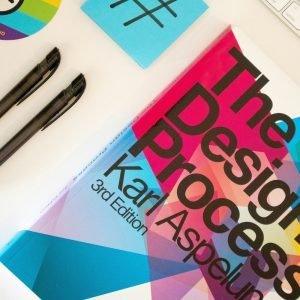
As the book The Design Process, written by Karl Aspelund, describes, the exploration and refinement stage requires designers to move from initial concepts into “fully defining each element of the design,” re-evaluate concepts for practicality, and weigh questions of sustainability and environmental impact. This layered thinking and process is what separates professional design from a generated result.
What It Means to Deliver Original Work
Professional designers hold themselves to a standard of authorship, building work from scratch, informed by research, refined through iteration, and created specifically for the client in front of them, not assembled from borrowed patterns or interpolated from existing datasets.
Organizational leaders often arrive at a sharper understanding of their own mission, values, and goals through the back-and-forth with a skilled creative professional. A designer asks the questions that force clarity, they push back when something does not align, and they listen for the details a client might not think to mention.
Ultimately, people are trying to connect with other people. A brand built through a genuine human partnership carries stories, perspectives, and nuances that technology alone cannot uncover. Working with a designer through a full branding process means leaving with a clearer articulation of who you are, a visual system built to grow with you, and a collaborator who understands your brand well enough to extend it across every touchpoint your audience encounters.
AI Has a Place. It Is Just Not in the Final File.
None of this is an argument against AI as a tool. Used thoughtfully, it can accelerate early stage exploration, generate mood board starting points, or help a team quickly visualize directional ideas before investing in more detailed development. At Creative Repute, we are not opposed to AI as a reference or ideation aid. The line is simply that AI belongs in the process, not in the final deliverable as the finished product.
An AI-generated logo cannot be owned, trademarked, or defended, while a professionally designed one reflects who a business is, what it stands for, and gives them full ownership of an asset they can grow with for years.
Designers are not being replaced because what they do cannot be replicated. It is strategy, authorship, and human partnership, and that will always be the better choice.
If you are ready to invest in design work your business can fully own, we would love to work with you. Request a quote today and let’s build something worth owning.